

Romantasy: Where the Brown Chicks Aren't...
Sinfully Yours | A Writer's Life 2

Fantasy romance, or romantasy if you’re chronically online like me, is in its golden age. Magic kingdoms, spicy fae lovers, battles fought between passion and power. But every time I scroll through BookTok, one thought pokes at me.
Where are the fantasy divas who look like me?
Let’s be honest. Most of the heroines topping the romantasy charts could share a Sephora shade number. Pale skin. Long hair in some poetic shade like “sun-kissed chestnut” or “moonlit blonde.” Petite frame, somehow strong enough to slay dragons yet fragile enough to need saving by the hottest man in the realm. And then there is the contradiction that somehow became a trope: she is “plain,” but every man within a three-mile radius is ready to abandon his crown for her.
Meanwhile, girls like me, brown skin, natural hair, a little chonky in the tummy, are usually the best friend, the comic relief, the side character who makes the snappy comment before disappearing off-page. And sure, I love a good side character. We get the best lines and none of the bullshit. But sometimes I would like to be the one the prophecy is about. The one who gets the sweeping orchestral love theme. The one who gets the tasty, Lucien-like hot fae prince.
The Pattern That Will Not Die
It is not just in the books. Scroll through BookTok or Reels, and you will see a flood of AI-generated clips meant to represent your favorite romantasy heroines. And somehow, every single one of them looks like the same little white girl with a model’s jawline and a wind machine. The fantasy worlds might have endless races of elves and shifters, but apparently, melanin is the true rarity.
A Peek at the Page
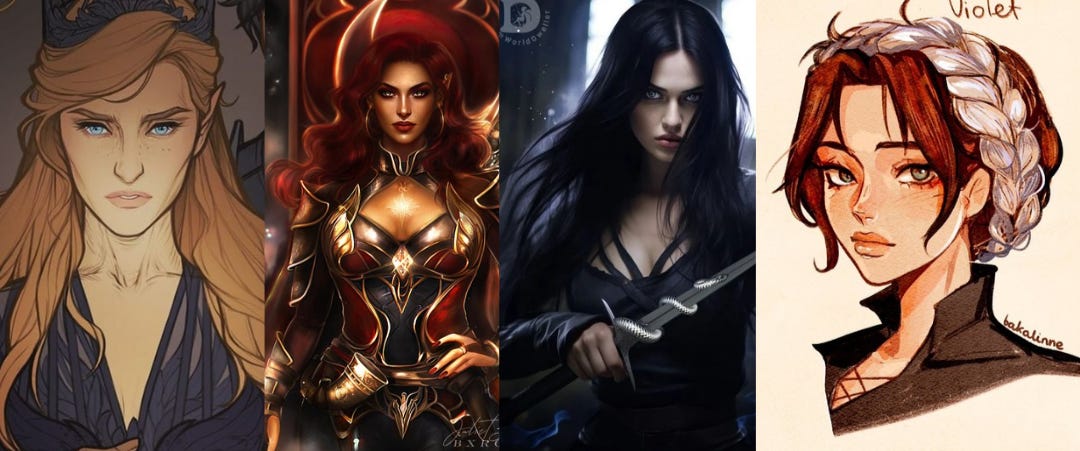
Take a look at a few of the current hot heroines.
Feyre Archeron from A Court of Thorns and Roses is described as having pale skin, golden-brown hair, and a slender frame.
Bryce Quinlan from Crescent City has red hair, lightly freckled skin, and a dancer’s body.
Those are the ones I’ve actually read, but even a quick look around BookTok or Goodreads shows more of the same.
Violet Sorrengail, the heroine of Fourth Wing and Iron Flame, is pale and slender, with hazel eyes and brown hair that fades into silver at the tips. Her fragility is part of her identity; she is delicate, sickly, and beautiful in the way porcelain is beautiful.
Oraya, from The Serpent and the Wings of Night, is human, raised by a vampire king, and though her skin tone is never clearly stated, the fan art, AI reels, and promotional imagery all depict her as light-skinned, ethereal, and sharp-featured, as if the genre itself insists on one face for every heroine.
And then there are Nesta and Elain. Pick one. They both sound like they stepped out of a Prythian Pantene commercial. And we all know Cassian should be the one featured in those.
Do not get me wrong. I enjoy these kinds of stories. I have read them, loved some of them, and screamed over fanfics that outshone the originals. But the pattern is impossible to ignore. The further I read, the more it feels like being invisible in a room where everyone insists representation exists because “hey, there’s a dark-haired friend.”
The Industry Problem
Here is the uncomfortable truth. When a Black girl graces a romantasy cover, the book often sells less. Not because readers don’t want her, but because the people controlling the marketing still believe the myth that “diverse books do not sell.”
The Ripped Bodice’s annual report on racial diversity in romance showed that in 2020, only about twelve percent of romance books were written by authors of color, even though nearly forty percent of the U.S. population identifies as non-white. The numbers creep up each year, but they are still embarrassingly low. Publishers Weekly even quoted editors who admitted they are told to “tone down the diversity” for wider appeal. Imagine that. A world of dragons and demigods can exist, but a brown girl on the cover is somehow too unrealistic.
And yet, in the United Kingdom, new data shows that stories with protagonists of color are booming, with volume up 154% and value up nearly 300% between 2020 and 2024. The readers are out there. The interest is real. The gatekeepers sound like the problem to me.
So Where Are the Girls Who Look Like Me?
That is the part that stings. Because when I was younger, I didn’t even know I wanted to see myself in these stories. I just thought the main girls were supposed to look like that. But as I’ve gotten older (and aged like a fine wine, thank you VERY much), I realize how much I crave the kind of fantasy where my brown skin didn’t make me exotic or symbolic. It made me the main event.
I want to see curls that defy gravity and queens with stretch marks under their gowns. I want to see heroines whose bodies take up space unapologetically, who wield power without needing to look ethereal to earn it.
I’m not asking for a quota. I’m just asking for balance. For mirrors in between all those windows.
Writing My Own Magic
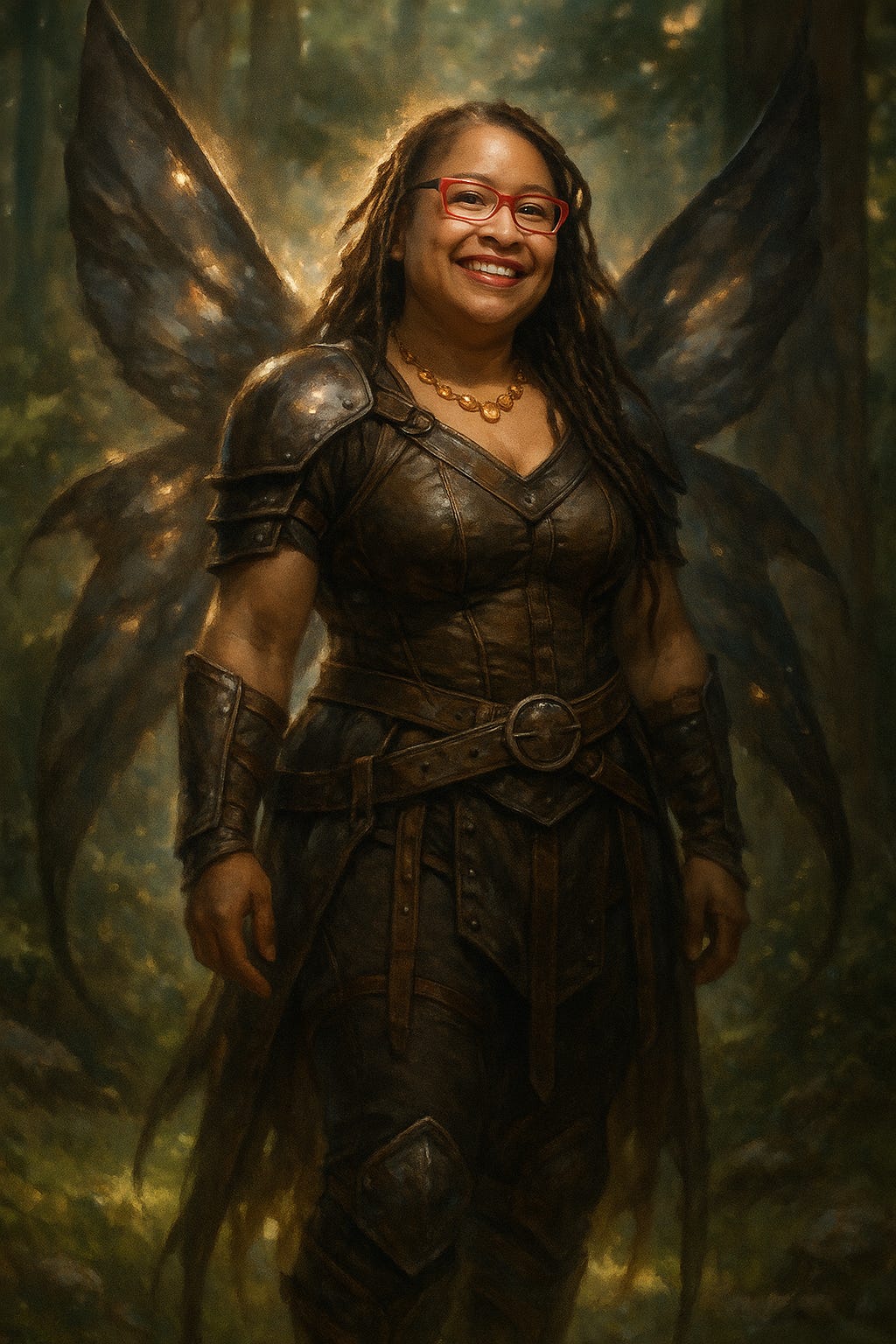
That’s why, when I sit down to write, I build worlds where girls like me take up the whole page. My heroine is not an accessory to someone else’s prophecy. She is the prophecy.
In my stories, brown girls wield power, fall in love, and save the realm, and sometimes need saving, too. They get messy (okay, they’re messy themselves…), and angry, and adored. They get their happy endings without shrinking to fit them.
The Point Is Not to Hate, It Is to Expand
I’m so not throwing shade at the genre. Not by a long shot. Hell, right now is the best time to escape reality and fall into a different one. I am a card-carrying member of the ACOTAR fan club—maybe more for the fanfic than the books—but as an internet buddy once said, fandom can make a series. I just think the fantasy shelf has room for more faces, more bodies, more magic.
Because when little black and brown girls wander the bookstore aisle, they deserve to find covers that whisper, You belong here, too.
If that means I have to write them myself, then so be it. But I hope I am not the only one. I hope more writers pick up their pens, and more readers demand their faces in the fantasy. I hope one day I can walk into a store and, surrounded by glittering covers featuring brown fairy queens, finally say:
“Ah. There she is. She looks like me.”
Sinfully yours,
Erica B
Looking for a fantasy featuring strong, black heroines? Check out these lists:
NY Public Library’s List of Black Romantasy To Get Lost In
Fresh Fiction’s List of Black Romantasy Reads
Mefeater’s List of Must-Read Fantasy Featuring Powerful Black Heroines
Need even more reads? Check out the Tales of Erotasy curated list of stories to read. Support the world’s indie authors.
That art of you as a dark fairy is incredible. But I'd say this isn't just a romantasy problem. It's most of media / Hollywood.